Making the perfect cup of coffee at home comprises different steps. The entire journey starts with grinding and continues with tamping, brewing, and possibly frothing. Grinding is, in fact, a crucial step that affects the final cup, transforming roasted coffee beans into a powder to extract the flavours. As 50% of the aromas vanish within fifteen minutes of grinding, it’s best to use freshly ground beans to maximise their full potential for an authentic Espresso. But perfectly timing the grind isn’t enough. To achieve an ideal grinding level, there are several factors to consider before grinding the beans. The most important ones are the roast level and, perhaps unexpectedly for many, the coffee bean’s botany.
How does roasting level influence grinding and pairings
When grinding coffee beans at home, consider that the grind should be coarse, medium, or fine, depending on the beans’ roast level:
Lightly roasted beans prefer a fine grinding which elicits a light brown hue and highly pronounced acidity;
Medium-roasted beans, offering a fuller body than lightly roasted counterparts along with a more harmonious balance of flavour, aroma, and acidity, require medium grinding;
Dark roasted beans with their dark colour and bitter, smoky flavour are usually ground coarsely;
Extra dark beans require coarse grinding to produce a strong coffee with substantial crema. The full-bodied beverage contains a pronounced pastry-like aroma and extra bitterness followed by a long, intense aftertaste.
The roast level has a significant impact on the acidity and bitterness of coffee beans, which affects their compatibility with other beverages, like milk.
The choice of roast and milk pairing is pivotal in achieving the desired flavour balance. Darker roasts are characterised by lower acidity, strong bitterness, and pastry-like aromas that harmonise with milk, enhancing the overall sweetness. In contrast, lighter roasts, more acidic, and less bitter have fruity and floral notes that may not complement well with milk’s flavour, so there’s a prevailing preference against pairing milk with lighter roasts.
Always keep the coffee botany in mind
Something that may often go unnoticed is that coffee’s botanical factors, including its cultivation altitude, have a significant influence on every aspect of the bean, from its development to processing and, ultimately, grinding. Beans belonging to high-altitude varieties, such as specialty and lightly roasted 100% Arabica, are characterised by increased density and firmness, making them best suited for finer grinding. In contrast, for blends containing dark-roasted Robusta beans from lower-altitude regions, coarser grinds are recommended.
De’Longhi’s fully automatic solutions for grinding beans at home
Thanks to its unique technology, a De’Longhi machine is a true ally in the kitchen when grinding coffee beans at home. Indeed, fully automatic coffee machines like De’Longhi PrimaDonna Soul, a system that sets the specific grinding size and brewing parameters depending on the bean type, roasting level and user feedback to pour the perfect cup–a perfect coffee extraction that preserves and exalts all the coffee aromas for the tastiest result.
In addition, the Adaptive Grinding Technology on machines like Maestosa and PrimaDonna Soul controls the grinding for your preferred coffee blends to release the maximum aroma. The device knows the grounding time and size for the coffee beans, and coffee lovers can consistently brew with freshly ground beans.
If you want to drive with a gear shift, choose a manual machine
De’Longhi’s manual machines provide adventurous coffee lovers with a more professional-style alternative, La Specialista Maestro and La Specialista Prestigio machines, in particular, feature Sensor Grinding Technology that brews coffee perfectly with the right amount of powder. The unique grinding sensor produces an appropriate ground texture every time, automatically adjusting the coffee dose when the grinder setting changes–this keeps the dose consistent by delivering the same amount of coffee.
Coffee enthusiasts can take their pick from up to eight grind settings, personalizing their choice to the type of coffee beans used, whether it’s 100% Arabica or an Arabica-Robusta blend. Variations in bean density produce different results, so to attain the perfect grind, you must keep in mind a set of essential tips and tricks:
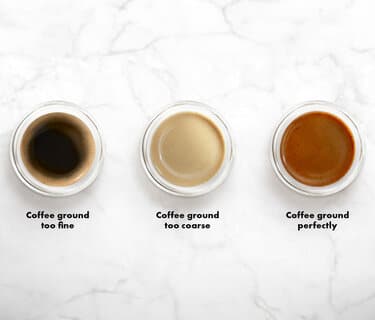
Finding the right balance is of critical importance: grinding too finely can lead to a slow, over-extracted shot with a bitter, burnt taste, while a coarser grind may produce an under-extracted, weak, and watery shot often with a sour note;
Also, to achieve a uniform grind, it’s necessary to make gradual adjustments to the grinder while it’s in operation;
Stay encouraged if the taste falls short of your expectations on the first try; it takes three to four attempts to truly appreciate the impact of a new grind.
Simply examine the in-cup result to understand if your coffee is ground correctly and brewed with an appropriate dosage.
Whether opting for a fully automatic or manual machine, grinding coffee beans at home is the first step in the art of transformation to make an Espresso “perfetto”. Next one? Tamping.
PrimaDonna Soul
Unleash the true aroma of your coffee beans waiting to be explored and savoured with De’Longhi PrimaDonna Soul.